Long before algorithms ruled markets or models predicted our next move, we had something else just as powerful: language. It shaped civilizations. It built religions, resolved wars, and launched scientific revolutions. And now, in 2025, it has taken on a new role. It’s not just communication. It’s command.
We’ve crossed a threshold where words are not only expressive; they’re operational. You can literally talk to machines and things happen. No more compiling, no more syntax trees or stack overflows. You just speak. And something responds.
But there’s a twist. We’ve torn down the walls that once kept technology behind a veil of complexity, yet the results are mixed. Because it turns out, once everyone has access to power, the outcome depends on how clearly they can use it.
Which brings us to a quietly radical idea. Access to AI isn’t the final step. It’s the starting line. And the real differentiator is no longer technical. It’s human.
From Code to Conversation
The old tech elite had an edge: they knew the language machines spoke. Coding was fluency. Engineers were magicians. Now, those spells have been democratized. You can ask ChatGPT to analyze a spreadsheet, generate an app, write a screenplay, plan a product launch, even redesign your living room.
And people are. Daily. Millions of prompts per hour. Business users, creatives, parents, teachers, teenagers. This isn’t some Silicon Valley bubble anymore. This is infrastructure.
But in this new world of AI conversations, the success of what you get depends entirely on what you say—and how well you understand what you actually want.
You don’t need to speak Python. You need to speak clearly.
Because if you don’t, your intention will get lost in translation.
The Tattoo Shop Problem
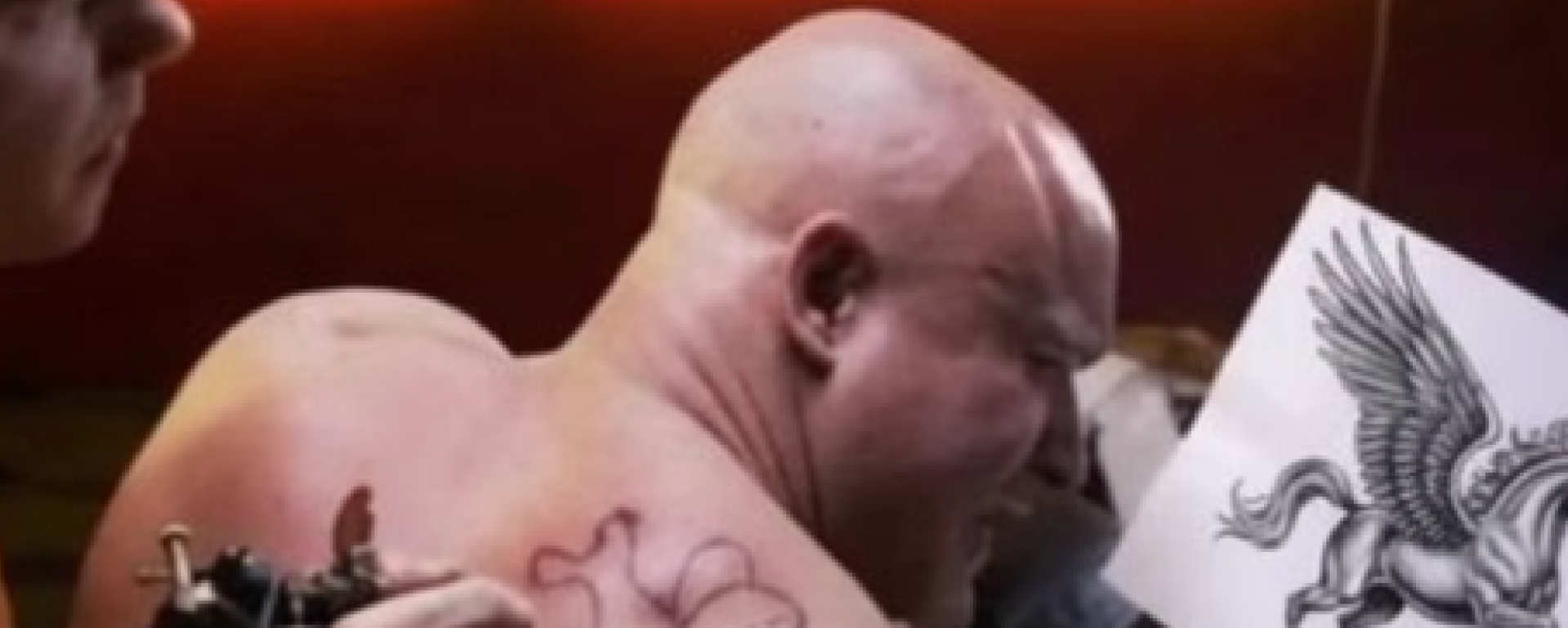
A man wants a majestic Pegasus. He hands the artist a reference image. But the tattoo? It’s a childlike cartoon. Technically accurate. Totally wrong.
What went wrong here isn’t artistic talent. It’s interpretation. A breakdown between what was envisioned, what was communicated, and what was executed. It’s a metaphor that lands with painful hilarity in the AI era.
We’ve all been that guy. We ask the AI for something. We get a result. It’s kind of what we said. But not at all what we meant.
And here’s the kicker: the AI didn’t fail. It did exactly what it was told. Which makes the failure 100 percent ours.
This is where the chain begins. Understand. Explain. Act.
And if the chain breaks early, the action doesn’t matter. It won’t get you where you meant to go.
Understanding is the First Interface
Understanding is underrated. Everyone wants faster answers, better tools, smarter outputs. But few stop to ask whether the input is clear enough. Whether the person at the keyboard truly understands the problem they’re trying to solve.
This is why Dewey’s quote hits so hard. A well-defined problem isn’t a technical victory. It’s a cognitive one. Clarity is capability. Especially now that machines are our creative partners, our co-writers, our silent collaborators.
If you don’t understand the essence of what you want, you can’t break it down. You can’t explain it. And if you can’t explain it, AI can’t help you. Neither can your team. Or your customer. Or your investor.
This is where Einstein’s wisdom kicks in. Simplicity isn’t about dumbing things down. It’s about depth. When you truly grasp something, you can distill it. That’s the skill. That’s the superpower. That’s the new literacy.
The Hidden Skill: Asking the Right Questions
Before understanding becomes clear, before explanation becomes sharp, there’s another layer we often overlook—the question.
Asking the right question is itself a form of intelligence. It reveals what you’re focused on, what you value, what you’re ready to act on. And in the age of AI, questions are no longer just conversation starters. They’re triggers for action. A well-formed question is a command. It’s a blueprint. It’s the opening line of a dialogue that turns thought into reality.
When people struggle with AI tools, it’s rarely because they’re “not technical enough.” It’s because their questions are vague, overloaded, or unexamined. They’re trying to skip ahead to the solution without interrogating the problem.
But the best builders, strategists, and creators know this: You don’t get better answers by yelling louder. You get better answers by asking better questions.
Think of your mind as a search engine. If your queries are unfocused, the results will be too. But if you drill down—if you question your assumptions, reframe the challenge, and isolate the real friction—you unlock power.
That’s what great leaders and thinkers do. They don’t always have the answers. But they know how to ask the question that makes everyone in the room think differently.
In a machine-readable world, that’s not a soft skill. That’s operational excellence.
The Return of the Human in the Loop
Everyone talks about humans in the loop like it’s some ethical check on automation. But there’s a deeper layer. The human in the loop isn’t just there to verify. They’re there to clarify.
You are the interface before the interface.
And in a world where tools are as accessible as the search bar, comprehension becomes the bottleneck. Not access. Not training. Not the model.
Your brain is the new API limit.
And this changes everything. Because it reveals something many forget: AI is not intelligence. It’s reflection. It mirrors the sophistication, clarity, and purpose of the human engaging with it. It gives you back your own logic. Or lack of it.
So the ones who thrive in this new world are not the best technologists. They’re the best translators—of intent, context, nuance, and purpose.
Explain It Like You Mean It
This is not about speaking perfect English. It’s not about writing better prompts. It’s about something more fundamental. The ability to map what’s in your head to what happens in the world.
That’s the real art. And it hasn’t changed since Socrates roamed the agora. The difference is, now you have a partner with infinite speed, scale, and stamina.
The better you explain, the more aligned your outcomes. The worse you explain, the more absurd the result.
And the internet doesn’t need another AI horror story or viral mistake to prove the point. The lesson is already here. In ink. On a man’s back. Forever.
Action is Only as Good as Its Premise
We live in a culture obsessed with action. Launch. Build. Scale. Ship. Move fast. Break things.
But what if the thing you’re breaking is your own clarity?
What if the real innovation is slowing down just long enough to get the understanding right?
AI doesn’t solve that for you. It reveals it. Over and over again.
Which brings us full circle. In a world where we can all talk to machines, the winners won’t be the loudest, the fastest, or the ones with the most tools.
They’ll be the ones who mastered the most ancient technology of all.
Clarity.
 Jose Larrucea