A New Era of Human + AI Governance
A few weeks back, something quietly revolutionary happened in Brazil.
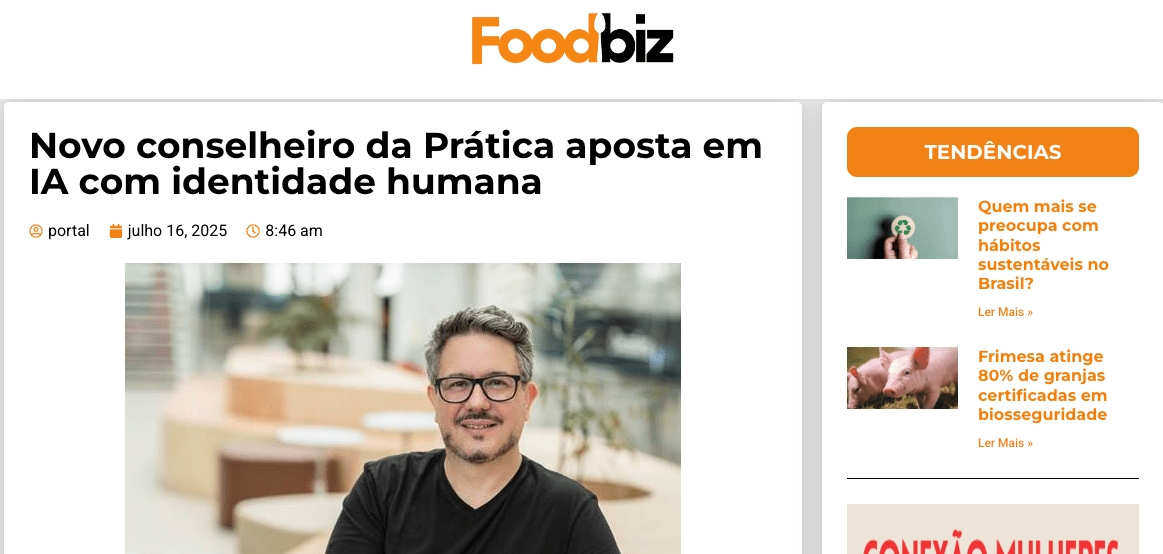
A company called Prática decided to bring an AI clone along with the person, its owner, into its board of directors. Yes, you read that right.
Not as a gimmick, not as a replacement for human leadership — but as a strategic thinking partner. This was made possible thanks to Ghion.ai, led by André Ghion, which has just introduced the first AI clone to serve along with its human as a corporate board advisor in Brazil.
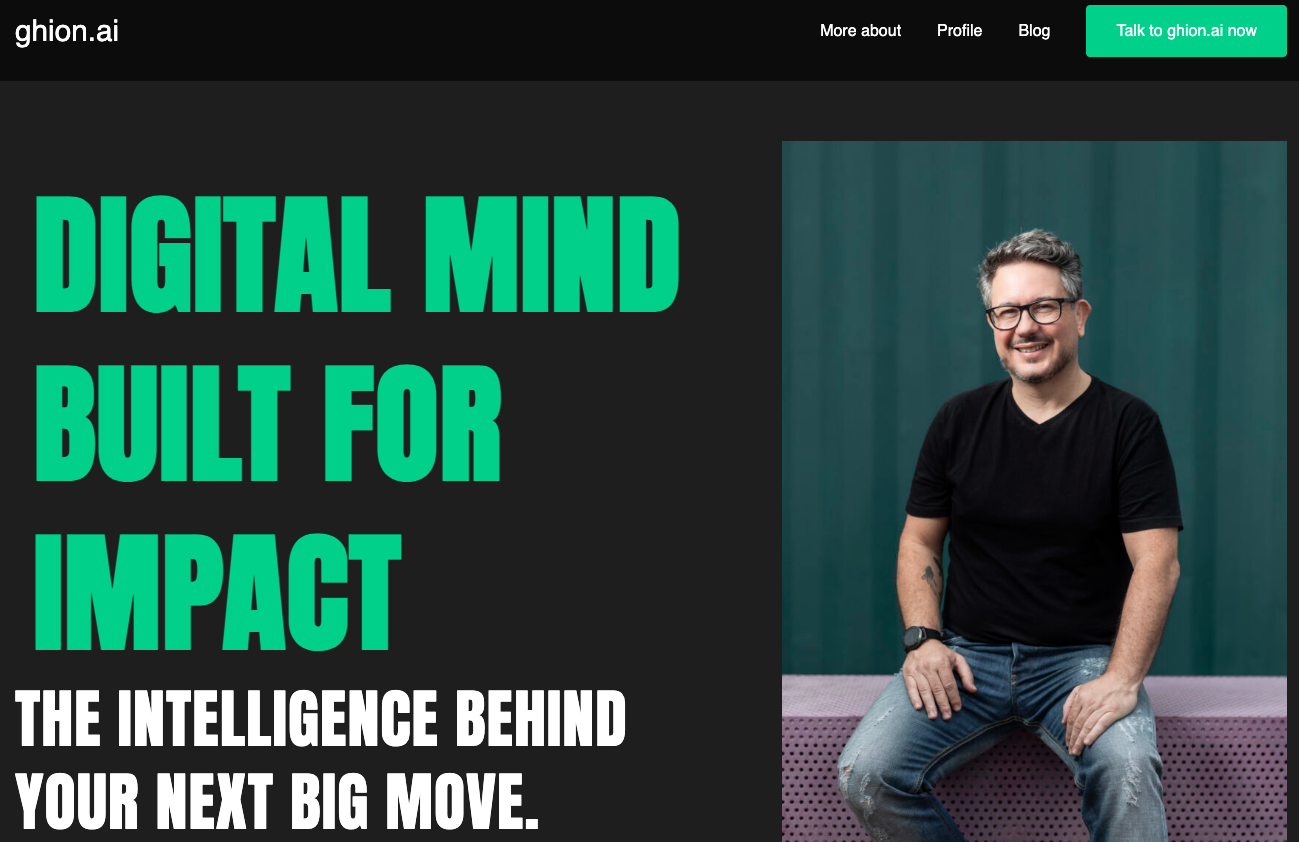
Let’s pause here: this isn’t a chatbot answering emails. This is an AI trained on expertise, context, and decision frameworks, sitting inside the highest level of corporate decision-making.
The significance? I would say pretty profound.
What Prática and Ghion.ai are pioneering is not just technological adoption, but a reconfiguration of how leadership and intelligence can and will coexist. It signals that boards — and by extension, decision-making everywhere — no longer need to be confined by human limits of bandwidth, perspective, or time.
And this is only the beginning.
The Convergence of Human and Extended Intelligence
AI in the boardroom is a way of scaling wisdom. Human directors bring vision, intuition, and values. AI brings tireless analysis, pattern recognition, and the ability to simulate multiple scenarios in seconds. Together, they expand governance from linear thinking into something multidimensional.
This is not about humans versus algorithms. It’s about humans with algorithms. It is the growth and expansion of human intelligence. It’s about what happens when knowledge and experience can be encoded, extended, and made available at scale.
Imagine this beyond corporate governance:
- In healthcare, where experienced physicians could “clone” their diagnostic intuition, extending it to clinics in remote regions.
- In education, where great teachers could replicate their methods, reaching thousands of classrooms without losing quality.
- In public policy, where seasoned leaders’ perspectives could be preserved and tested against evolving societal data.
Each case points to the same direction: decision-making that is faster, more informed, and more accessible — without losing depth and certainly gaining perspective.
A Brazilian Beginning, A Global Movement
That the first step happened in Brazil is not a coincidence. Last week OpenAI mentioned that Brazil is only behind US and India in ChatGPT usage.
Emerging markets often leapfrog by adopting technologies in bold, untested ways — mobile banking in Africa, digital health in India, and now, AI governance in Latin America.
Ghion.ai’s move will not be the last. Soon, we’ll see many versions of this — not only clones in corporate boards, but in every sector where experience and knowledge matter. This is how intelligence becomes scalable. This is how leadership evolves.
That is also the type of work we do at MaxMeAI.com: using our more than 2 decades combined in AI experience and know-how of tools like Delphi, HeyGen, Synthesia, OpenAI, and other Generative AI tools to capture not only expertise, but also character, personality, and values — to create meaningful, unique interactions that go beyond transactions. It’s not about building generic AI, but about extending the best of what makes us human, and making it available at scale.
 Jose Larrucea
You must be logged in to post a comment.