
… and What Both Sides Get Wrong
I have seen this topic around a few times, and as a European living in Brazil I felt something was off.
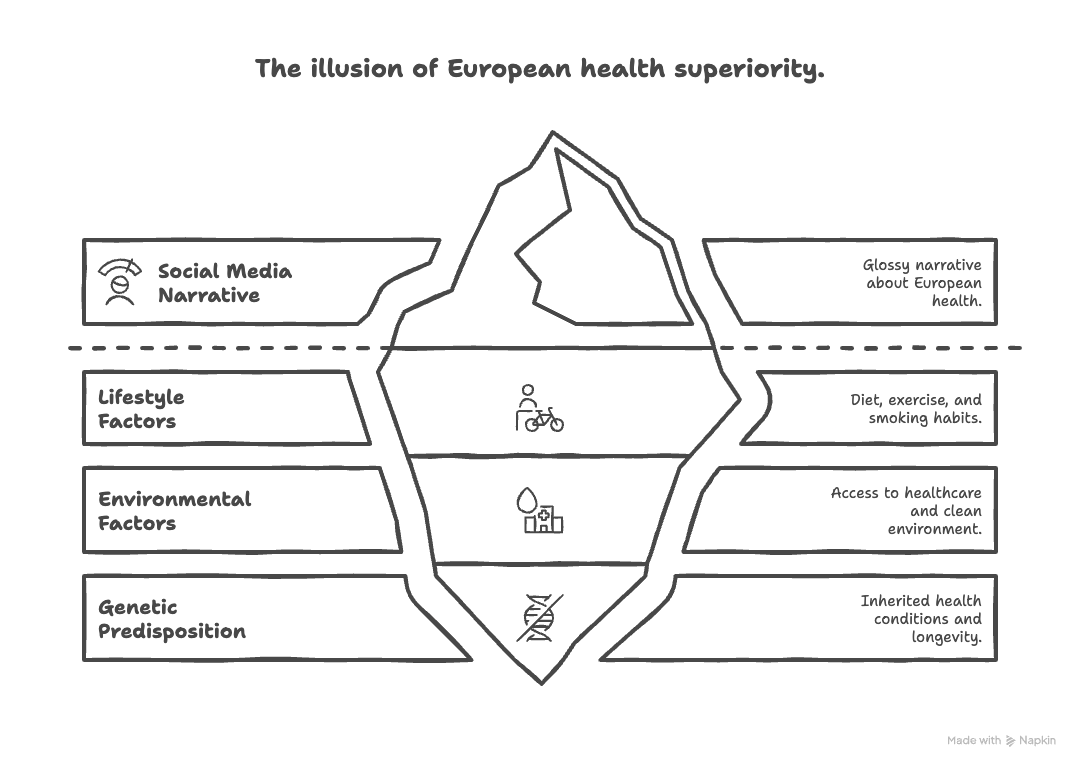
There’s a glossy narrative that makes the rounds on social media: European men drink wine, eat bread, and chain-smoke, yet somehow outlive the average American, who is apparently drowning in seed oils and XXL sodas.
It’s a story with cinematic appeal — the Mediterranean lunch scene, the Dutch commuter on a vintage bike, the Parisian café breakfast. But like most Instagram reels, it’s been edited for maximum aesthetic and minimum reality.
Yes, Europe Has Some Real Advantages
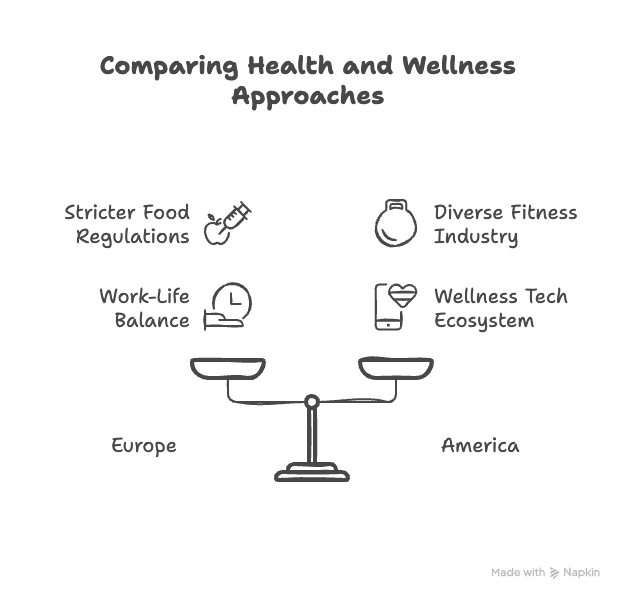
The EU does regulate food more aggressively — some synthetic dyes and additives common in the U.S. are banned outright. Portion sizes are generally smaller, and many cities are designed for movement rather than parking spots. You don’t need a Fitbit to get 10,000 steps in when your commute is a cobblestone walk past three bakeries.
But Let’s Zoom Out
“Europe” isn’t one wellness monolith. The UK has obesity rates rivaling the U.S. Eastern European supermarkets are temple-sized shrines to processed snacks. Rural Germany and suburban France can be just as car-dependent as Dallas. And yes, binge drinking is alive and well in plenty of EU countries.
That “built-in movement” trope? It’s real in Amsterdam’s bike lanes but falls apart in any town where getting milk requires a 10-minute drive.
Meanwhile, America Isn’t All Big Gulps and Drive-Thrus
The U.S. does some things really well for health — if you know where to look. The fitness industry here is massive and innovative, with gyms, studios, and online programs that are far more diverse and accessible than in much of Europe. Farmer’s markets are booming, urban food co-ops are on the rise, and in certain cities (Portland, Boulder, Minneapolis), cycling infrastructure would make Copenhagen blush.
America’s wellness tech ecosystem — from wearables to AI-driven nutrition tracking — is also years ahead of many European markets. If Europe is the café table, America is the beta-testing lab.
Stress? Nobody’s Immune
Europe’s work-life balance advantage is real in countries like France, Spain, and Denmark. But “vacation mode” doesn’t translate everywhere — in less wealthy regions, time off often means job insecurity, not hammocks and Aperol spritzes. And the U.S.? The culture of “always on” is brutal, but its growing remote work trend could unlock more flexible, movement-friendly days than the old cubicle grind.
The Real Divide Isn’t a Border
This isn’t about “Europe vs. America.” It’s about whether your environment supports movement, access to fresh food, manageable stress, and preventive healthcare — or whether it defaults to sedentary living, processed calories, and medical fire drills.
Some European cities nail the former. So do some American ones. And both continents have pockets that fail spectacularly.
What We Could Learn From Each Other
- From Europe: Smaller portions, stricter food safety standards, walkable infrastructure, and vacation policies that actually mean unplugging.
- From America: A culture of fitness innovation, data-driven health tech, and the sheer entrepreneurial will to reinvent wellness models.
Because health isn’t about where you live — it’s about whether your surroundings are set up like a good operating system: one that’s fast, clean, and updated regularly. The U.S. and Europe? Both have bugs to patch and features worth stealing.
 Jose Larrucea
You must be logged in to post a comment.