
What if your company never forgot anything?
The Infinite Knowledge Legacy is here—and it’s rewriting how businesses think, learn, and scale.
In most companies, when someone quits, something dies. A process disappears. A pitch is lost. A shortcut never gets passed on. It’s not just people that leave—it’s memory.
Now imagine that never happening again.
A new wave of AI-infused infrastructure is making it possible to capture how top employees think, bottle that wisdom, and embed it directly into enterprise systems. The idea isn’t new—but the execution finally is. And it’s spreading.
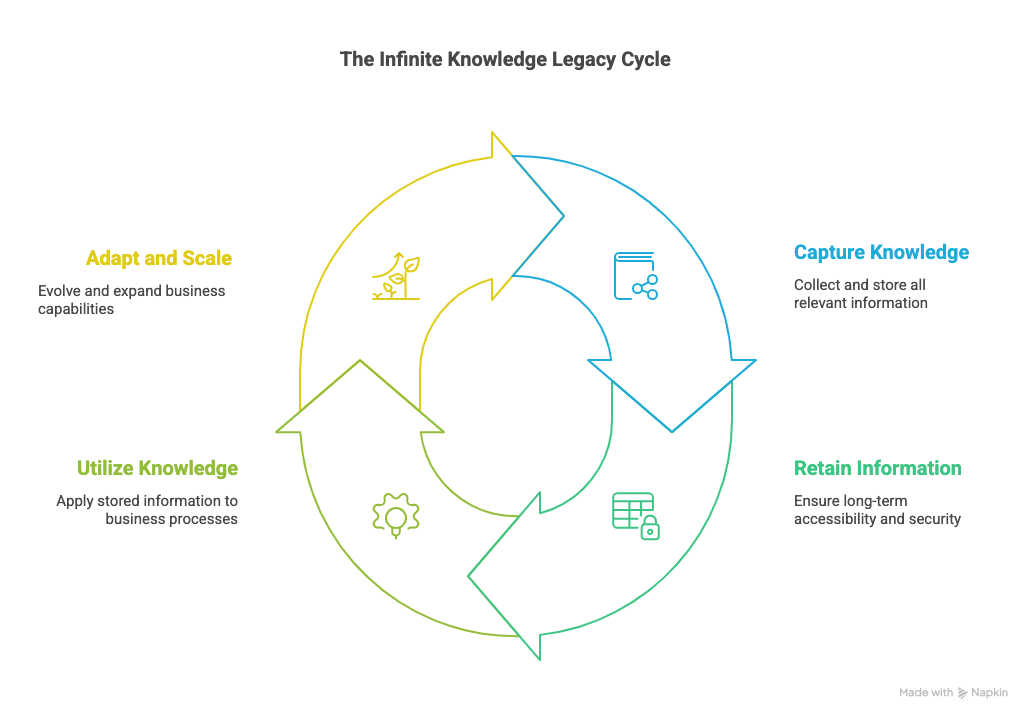
Companies are quietly creating what I like to call an “Infinite Knowledge Legacy“: a way to digitally clone the brains and minds of high performers and scale them across teams. Part AI training layer, part institutional memory, part productivity safety net—IKL aims to make forgetting obsolete.
“We’re at the beginning of a journey that could redefine what it means to preserve our legacy, to interact with our past, and to approach the concept of mortality,” says Sam Thomson, CEO of Sensay, building digital replicas. “We’re exploring new frontiers in AI, machine learning, and interactive technology, all with the goal of making our digital twins as authentic and engaging as possible.”
Source: The Journey to Sensay: A Personal Odyssey Towards Digital Immortality
In practice, the IKL enables companies to create AI-driven copilots trained not just on policies, but on past decisions. Interactive clones that live in Slack, support dashboards, CRMs, and product wikis, etc. Not generic bots. Digital proxies of real people—trained on their tone, their context, their quirks.
This isn’t just about automation. It’s about eternal memory—making company knowledge immortal.
In general the use of AI has become massive. In Brazil, the government is now deploying AI to speed up legal systems. It could very well be IKL-inspired systems for compliance and documentation. Or companies like Ifood, according to Fabricio Bloisi on Bloomberg News, “Our Customer Support is 60% done by Ai with 40% less costs”.
Source: linkedin
But the implications go far beyond smoother onboarding or 24/7 support. IKL turns traditional organizational dynamics inside out.
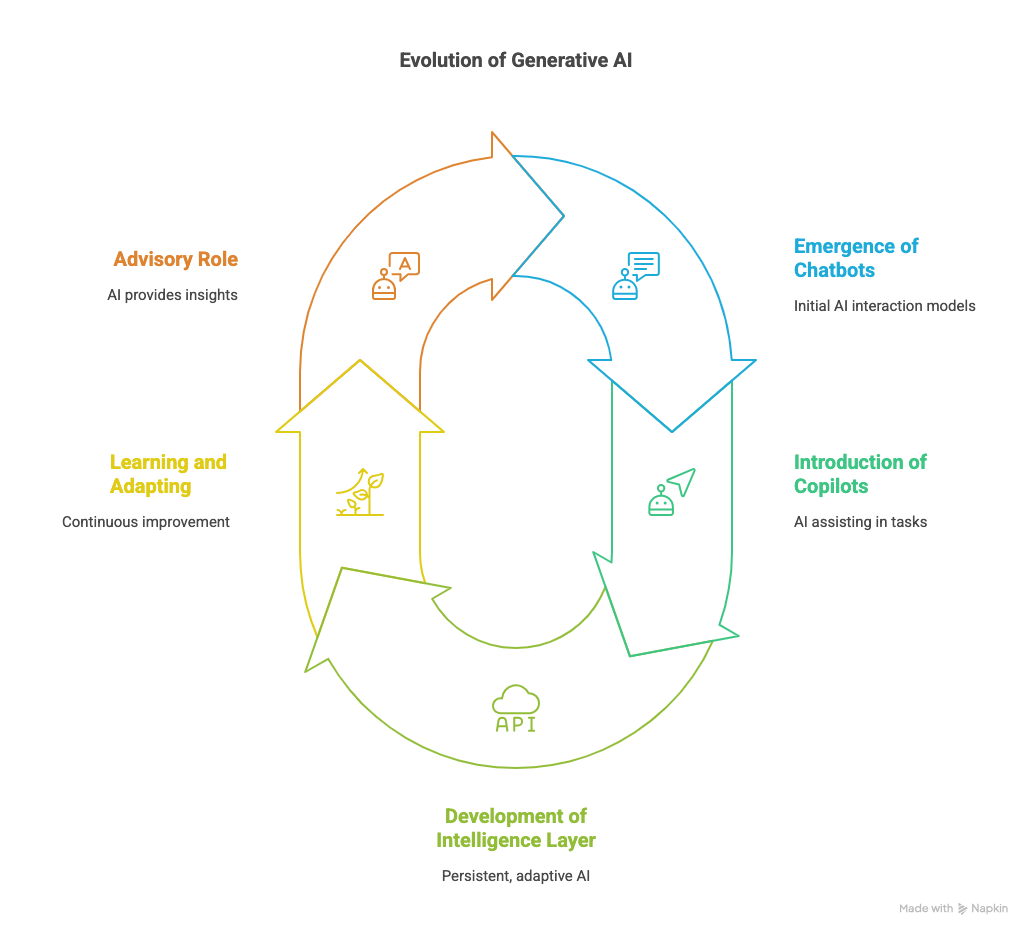
The timing makes sense. The past two years saw a Cambrian explosion of generative AI models. First it was chatbots. Then copilots. Now, companies are realizing they can build something deeper: a persistent intelligence layer that learns, adapts, and advises—like an always-on, always-improving clone of their best.
But building an IKL isn’t just plug-and-play. First, you need data: interviews, strategy docs, internal recordings, even Slack threads. Then comes training. Teaching the model not just what to say, but how the person behind it thinks. And finally: deployment. Clones aren’t useful unless they’re embedded everywhere—where questions are asked, where work happens, where decisions get made.
The result? A kind of hive mind. Not in the dystopian sense, but in the hyper-efficient one.
Imagine a company with 30,000 employees and 2 billion customers and the amount of vast information loads. How to handle them, which systems to use to retrieve the information, what type of database access, programing language. Well, Prosus has built its own Ai to help with that, it is called Token and it circulates knowledge and data amongst the employees of the many different companies of the group. Definitely ahead in building a way towards IKL.
Watch Prosus CEO: The Best Way to Trust AI is to Understand It – Bloomberg
The moment is now to build your own without being a 30k employee company.
Think of it now as a way to help knowledge travel to Product learns from support. A way to deploy Sales training on their own. Operations scaling without bottlenecks. A new hire can chat with a clone of the founder on day one and understand not just the “what,” but the “why.”
Not everyone is convinced. Critics warn that overdependence on these digital minds could dull a team’s edge. That relying on digital wisdom too heavily might flatten culture or introduce conformity. And there’s the IP risk: if your company’s brain is digitized, what happens if it leaks?
The concept is starting to ripple out into other sectors. Some startups are quietly productizing their internal IKL layers, offering them as premium client services. Others may be building founder clones that advise boards post-exit. A few envision spinning them out as standalone revenue streams—imagine a strategist-on-demand, powered by every market analysis you’ve ever made.
Legacy, in this context, doesn’t mean history. It means presence. The ability to show up, forever, even after the humans behind it are long gone. It’s founder succession without the succession. Institutional memory without the decay.
If that sounds far-fetched, consider this: the average company loses over 40 percent of its operational knowledge every time it goes through a major reorg. Retiring execs take decades of insight with them. Startups reboot with every funding round. IKL offers an antidote. Not a backup. A blueprint.
And yes, there’s something quietly radical about it.
We’ve built companies around people. Now we’re starting to build companies from people. And the first to do it well may never start from scratch again.
Again, the moment is now for you to build your own without being a 30k employee company.
 Jose Larrucea
3 thoughts on “The Quiet Revolution Turning Brains Into Infrastructure”
Comments are closed.