The Fragile State of Privacy Today
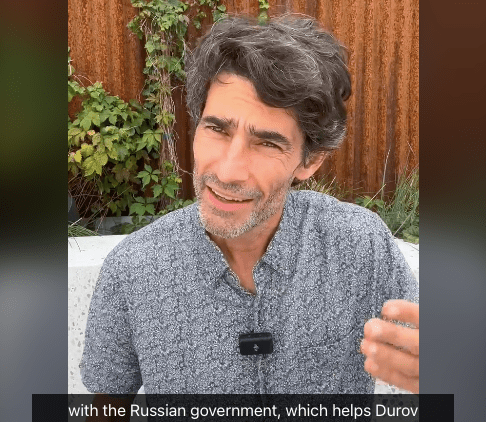
Not a weekend particularly bright by its warm weather, but the light brought by the unexpected arrest of Telegram’s CEO, Pavel Durov, in France. At least, it got me by surprise and apparently Nicholas Thompson feels there is certainly more than meets the eye.
Edward Snowden once stated, “Saying that you don’t care about the right to privacy because you have nothing to hide is no different than saying you don’t care about freedom of speech because you have nothing to say.” This idea is more relevant now than ever before, as we witness a growing crackdown on privacy advocates and technology leaders who challenge government control. In an era where artificial intelligence (AI) is rapidly evolving, the consequences of these actions are profound, potentially reshaping the future of privacy for all of us.
The recent arrest of Telegram’s CEO, marks another alarming chapter in the ongoing saga of silencing those who champion privacy. Durov’s Telegram platform has been a bastion for encrypted communication (or maybe not 100% as Nicholas Thomson declares), offering users a way to speak freely without fear of surveillance. But this has made him a target. His arrest follows the high-profile cases of Julian Assange, the founder of WikiLeaks, and Edward Snowden, the whistleblower who exposed the extent of government surveillance. These arrests are not isolated incidents; they form a pattern aimed at stifling innovation in privacy and deterring others from following in their footsteps.
The implications of Durov’s arrest are far-reaching. If a tech leader can be detained for the actions of their users, what does this mean for other companies and innovators? It sets a dangerous precedent where the protection of privacy is viewed as a criminal act. This could lead to a chilling effect across the tech industry, where fear of legal repercussions stifles the development of new tools designed to safeguard our personal data.
The justification for these arrests often revolves around national security. Governments argue that in an increasingly digital world, they need the ability to monitor communications to prevent threats. As I experienced in the past promoting Facial Recognition solutions to protect us, I learned technology can bring different types of value. But as AI technology advances, the power of surveillance grows exponentially. AI can analyze vast amounts of data, predict behaviors, and even identify potential threats before they occur. While this might sound like a positive development, it also raises serious concerns about the balance between security and privacy.
With AI, the line between surveillance for safety and surveillance for control becomes dangerously thin. The arrest of someone like Durov, who has advocated for strong encryption and privacy, signals that governments are willing to push that line further in the name of security. The more sophisticated AI becomes, the easier it is for governments to justify invasive measures, arguing that the ends justify the means.
The crackdown on tech leaders like Durov, Assange, and Snowden is not confined to one country. It’s part of a broader global trend where governments are collaborating to suppress efforts that promote privacy and free expression. The international pursuit of Snowden, for example, has shown how far governments will go to maintain control over digital communications. Durov’s arrest adds another layer to this global struggle, highlighting the increasing pressure on tech companies to comply with government demands or face severe consequences.
As AI tools become more integrated into government operations, the threat to privacy becomes even more pronounced. International cooperation in the development and deployment of AI-driven surveillance technologies could lead to a world where privacy is not just compromised but entirely eliminated. This would create a digital landscape where every move is monitored, every conversation is recorded, and every dissenting voice is silenced.
The arrest of Durov and others like him poses a significant threat to innovation, particularly in the realm of privacy. If tech leaders are punished for providing tools that protect user data, who will dare to innovate in this space? The risk of legal action could discourage entrepreneurs from developing new technologies that prioritize privacy, leaving users with fewer options to secure their communications.
This chilling effect on innovation is especially concerning in the context of AI. As AI systems become more advanced, the need for robust privacy protections becomes even more critical. Without new innovations in encryption and data protection, AI could become a tool for mass surveillance, used to track and control populations on an unprecedented scale. The suppression of privacy-focused innovation could thus lead to a future where AI is used not to empower individuals, but to monitor and manipulate them.
Privacy & Freedom, two sides of the same coin ?
What do you think?
 Jose Larrucea