I was scrolling LinkedIn this AM, when I came across a post from a well known advertising professional here in Brazil and it got my curiosity tickled – He was basically posting some of the declared use cases in which chat bots are being used according to a Washington Post study over a bunch of data analyzed.
The topic went on and on about how the journal analyzed 200K conversations, and came up with a nice list that I share below with the weights per use case. Ok.
The funny thing is that although I wanted to share this topic with you, and give my two cents on how I use it, and how I have been using it since 2023 when I produced 2 books (one focused on AI “AI Minds” and another one for my daughter’s anniversary where she became a super hero she loves), I ended up having another idea.
Interestingly enough, I feel that some of the topics mentioned in top 10 of the cases in the study, I do on a daily basis.
How Do We Humans
use chatbots today?
In addition, I used the chatbots, either the ones given “as is” by OpenAi or GPTs created or even recently avatars, or others I use for music making, composing lyrics based on ideas, or even discussing ideas for books based on future world scenarios, crazy stuff.
Now, also during a call later today, speaking with Eric, an entrepreneur friend who runs Ai Connect and shared a key finding; a tool, Napkin.ai that does magic 🙂 which basically makes perfect images to illustrate data like the study I mentioned earlier. The cool thing is that this tool and many many others can be found at AiGems which is another tool within the ecosystem of Ai Connect. Without wanting to sound to much of a marketeer, it feels having the right sources to tools that do the right job and the make job right or help us work more efficiently, effectively and in the end better is a good thing.
That said, and if you are still interested in seeing the details of how people use chatbots… here we go!
- Creative Writing and Role-Play (20%)
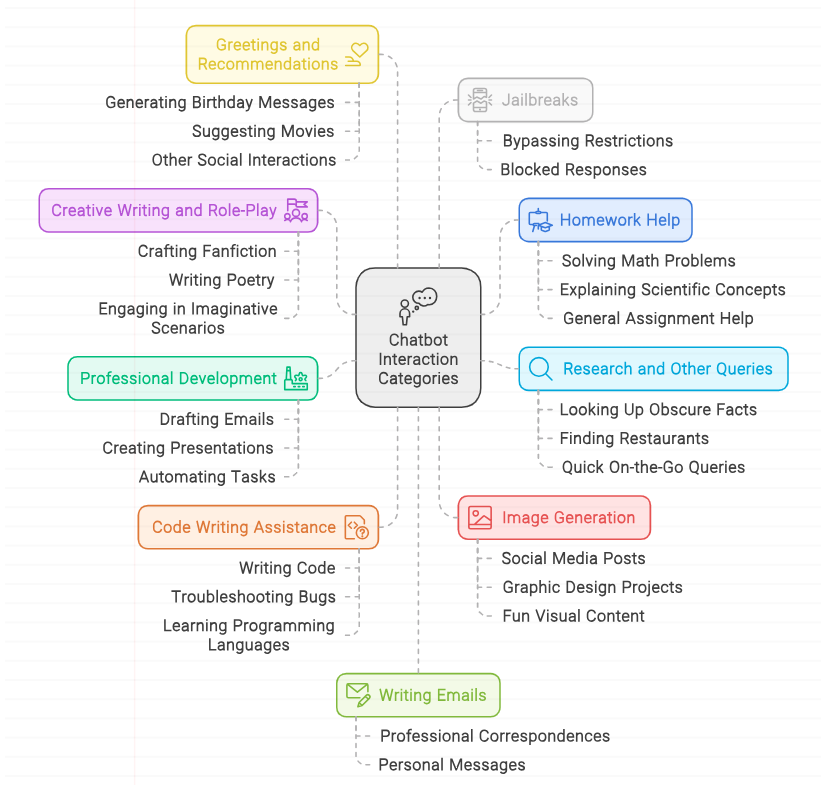
One of the most unexpected findings is that 20% of chatbot interactions involve creative writing and role-play. Whether it’s crafting fanfiction, writing poetry, or simply engaging in imaginative scenarios, users are turning to AI for a dose of creativity. This highlights the growing acceptance of AI as a co-creator in artistic endeavors.
- Homework Help (17%)
Gone are the days when students would solely rely on search engines for homework assistance. Today, 17% of chatbot conversations are about getting help with school assignments. From solving math problems to explaining complex scientific concepts, chatbots are becoming virtual tutors for students worldwide.
- Research and Other Queries (16%)
Whether it’s looking up obscure facts or finding the best restaurant in town, 16% of chatbot interactions are dedicated to research and general inquiries. The efficiency and immediacy of chatbots make them ideal for quick, on-the-go queries.
- Professional Development (15%)
Another significant use case is professional development, accounting for 15% of chatbot interactions. Users are leveraging AI to draft emails, create presentations, and even automate mundane tasks. This trend underscores the role of AI in enhancing productivity and streamlining work processes.
- Code Writing Assistance (7%)
In the world of coding, chatbots are proving to be invaluable. About 7% of users seek help with writing code, troubleshooting bugs, or learning new programming languages. This not only accelerates the learning process but also reduces the time spent on solving coding challenges.
- Image Generation (6%)
AI-powered image generation is another growing use case, making up 6% of chatbot interactions. Whether for social media posts, graphic design projects, or just for fun, users are harnessing the power of AI to create visually appealing content.
- Greetings and Recommendations (5.5%)
Chatbots are also used for generating greetings and providing recommendations. Whether it’s coming up with the perfect birthday message or suggesting the next movie to watch, this category reflects the social aspect of chatbot usage.
- Jailbreaks (4%)
Interestingly, 4% of interactions involve attempts to ‘jailbreak’ chatbots, meaning users are trying to bypass the AI’s programmed restrictions. This might include trying to get the chatbot to provide responses that are normally blocked or restricted, showcasing a curious side of human-AI interaction.
- Writing Emails (3.5%)
Email writing can be tedious, which is why 3.5% of chatbot users seek help with drafting their emails. From professional correspondences to personal messages, chatbots are making it easier to communicate effectively.
- Translation and English Help (3%)
Language barriers are no longer a significant hurdle, thanks to AI. Around 3% of chatbot interactions are dedicated to translation and English language assistance. This makes chatbots a valuable tool for non-native speakers and those learning a new language.
- Job Search (3%)
Finally, 3% of chatbot users are turning to AI for help with job searches. From crafting the perfect resume to finding job listings, chatbots are becoming an essential resource for job seekers.
And How About You?
How do you use chatbots in your daily life? Join the conversation and share your experiences in the comments below!
 Jose Larrucea
You must be logged in to post a comment.