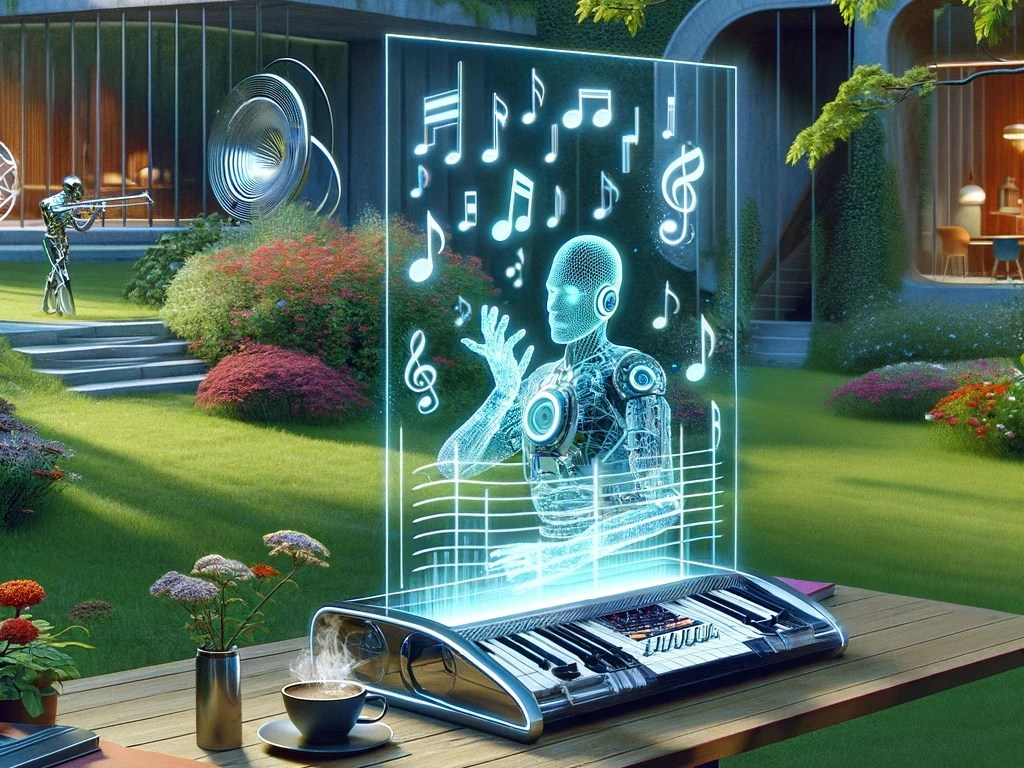
A couple of weeks ago I published my thoughts about creation and generation in the AI era, Yesterday, I found myself in the serene garden of a German friend’s house, a talented composer known for his contributions to modern music – While we were both savoring a rich aroma of espresso brewed from a fine Swiss machine, the conversation quickly drifted towards the role of AI in music—a subject that stirs up mixed feelings within the community. My friend expressed his concerns, worried that AI might overshadow the depth and authenticity of human composition. This sparked a nuanced discussion on how AI is shaping the future of music, paralleling the disruptions caused by past technological innovations.
AI as the New Instrument in the Composer’s Ensemble
Imagine a scene where groundbreaking technology meets the creative genius of a modern composer. AI is not just another tool; it’s becoming a transformative collaborator that offers a plethora of efficiencies, personalized experiences, and innovative soundscapes. For composers who embrace AI, it’s about leading the charge into a revolutionary future in music. This evolution echoes the transformative impact of the electric guitar on rock and roll.
Enhancing, Not Replacing, the Composer’s Touch
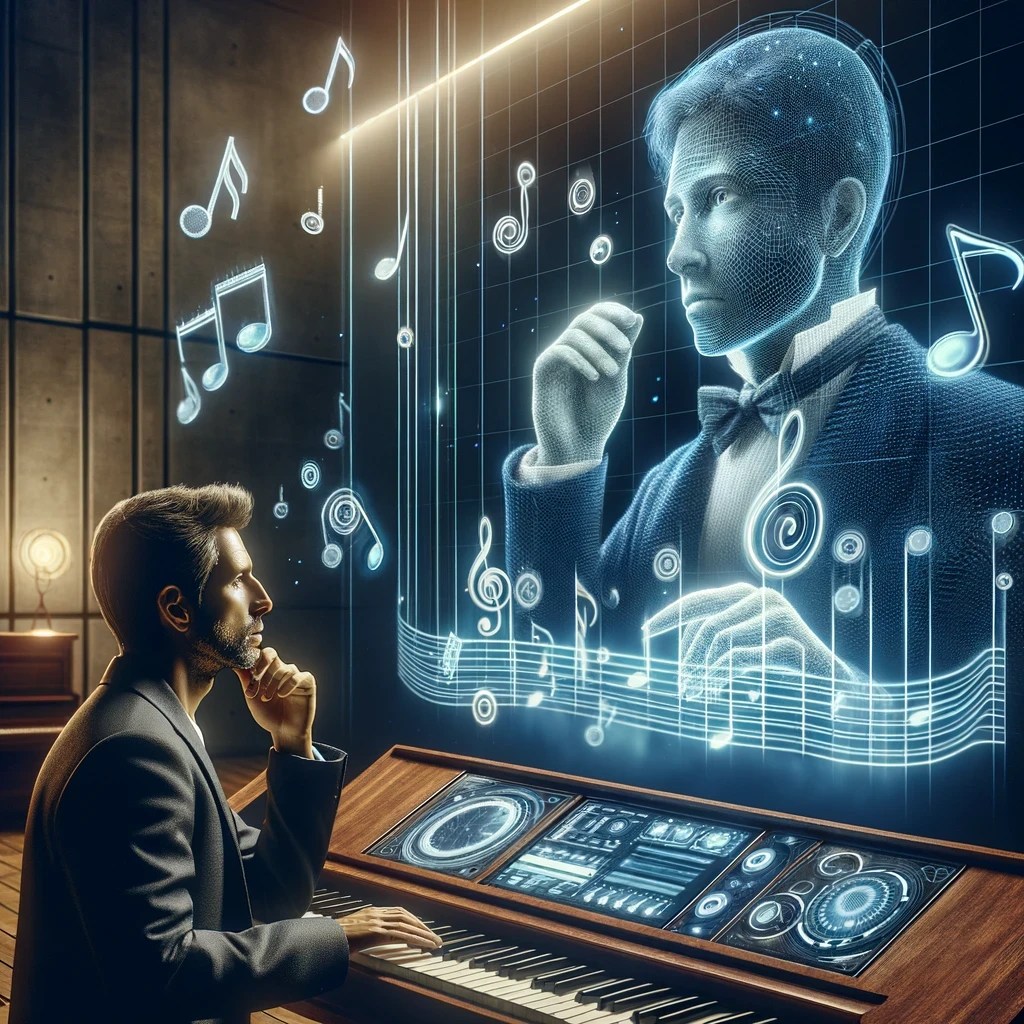
The advent of calculators in mathematics is a fitting metaphor here. Initially met with skepticism, calculators became invaluable for enhancing the mathematicians’ ability to tackle complex problems, not by replacing their intellect but by supporting it. Similarly, AI in music manages the computationally intensive tasks, allowing composers to delve deeper into the essence of creativity. It augments their capacity to innovate without replacing the soul of their artistic expression. The Thinkful website offers further exploration into how technology enhances human capabilities.
Reflecting on Past Technological Skepticisms
The invention of the printing press in the 1440s revolutionized the dissemination of knowledge, much like AI is poised to revolutionize music. Although initial fears speculated that mass-produced books might devalue the written word, what followed was an era of enhanced knowledge sharing. The broader implications of the printing press are detailed by Study.com.
Exploring the Boundless Potential of AI in Music
AI’s ability to analyze and synthesize vast arrays of musical data allows it to suggest compositions that blend traditional influences with avant-garde elements. This capability invites composers to explore uncharted musical territories, pushing the boundaries of conventional music composition, for instance a recent project, Suno.com offers more than 880 music styles consolidated for composers to check out and test.
Navigating the New Musical Landscape with AI
The music industry is in a constant state of flux, and those who adapt swiftly and effectively are best positioned for success. AI’s integration into music composition marks a pivotal shift, heralding a new age of musical exploration. Musicians adopting AI stand to redefine the boundaries of music, similar to the transformative role of synthesizers in the 1980s, as detailed by the BBC.
Concluding Thoughts: A Duet Between Tradition and Technology
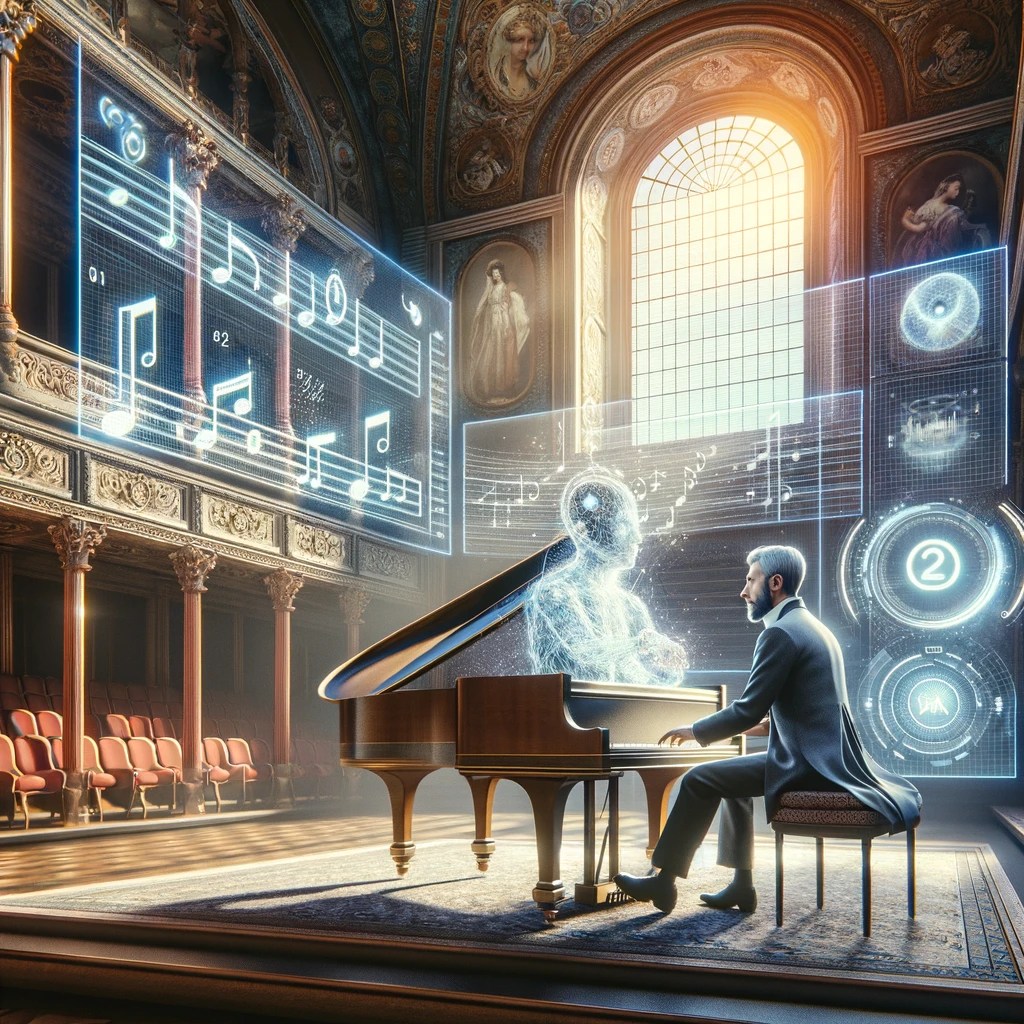
The convergence of AI with human musical creativity signals the beginning of an exhilarating new chapter in the narrative of music. While the journey may involve overcoming challenges and adapting to new methods, the potential for cultivating a richer and more diverse musical world is vast. By integrating AI, composers are not diminishing their roles but redefining the essence of music creation for the digital age.
For those intrigued by how AI is shaping the music production, a visit to Suno.com and Udio.com will raise some eyebrows.
 Jose Larrucea
One thought on “AI in Music Over Espresso”
Comments are closed.